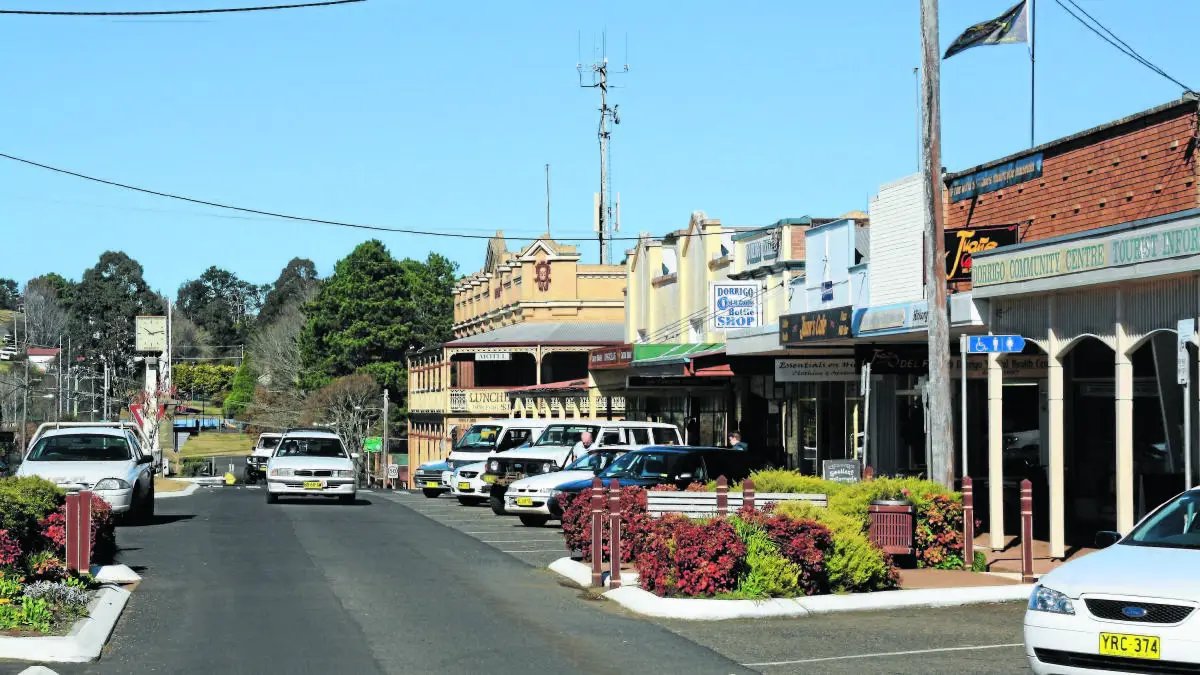
A daily check-in for older people in Dorrigo who live alone.
When someone on the plateau falls, or quietly becomes unwell, the question is how long it takes before anyone knows. This page sets out who is missed today, a simple design for noticing, and what a day with it would look like.
1sensor per home, on the fridge door
4people, asked in turn
~$190per home to set up
Dorrigo: about 1,100 people on the plateau, with an ageing population and thin service coverage.
The gap
Most days, nobody knows
The services designed for isolation reach people the system already knows. Volunteer visiting is generally tied to receiving aged care. Funded alarms need an aged care assessment. The people most likely to be found late are the ones with neither.
Two weeks in the life of someone who lives alone
Each row below follows one kind of resident through a fortnight, and each square is one day. A filled square is a day on which someone outside the house would reliably find out they were up and about: a visit, a support worker, a check-in. An empty square is not a bad day. It is a day on which, if something went wrong, nobody would know until someone happened to call.
MTWTFSSMTWTFSS
Not in aged careNo provider, no assessment, no review date
0 / 14
Approved, still waiting100,191 people nationally at 31 March 2026
0 / 14
Light home supportA weekly clean and a fortnightly shop
3 / 14
With a daily check-inA quiet day is flagged the same day
14 / 14
The fortnights are illustrative, not data about real people. The waiting figure is from the Support at Home data report.
Where funding does reach someone, it buys a pendant alarm monitored by a distant call centre. A pendant has to be worn and pressed, which is exactly what fails when someone collapses. And the call centre still needs a local person to go to the door. No program pays for that person, for anyone.
The design
One sensor, and a person who responds
At home
The fridge door
A small sensor notes when the door opens, and checks in every few hours to say it is working.
Over the town
A shared aerial
Low-power radio carries those two signals to one community aerial on the plateau.
Each day
One question
Has an ordinary day happened, judged against a fortnight of that person's own routine?
If not
People, in turn
The resident first, then a contact they chose, then a keyholder, then a local coordinator.
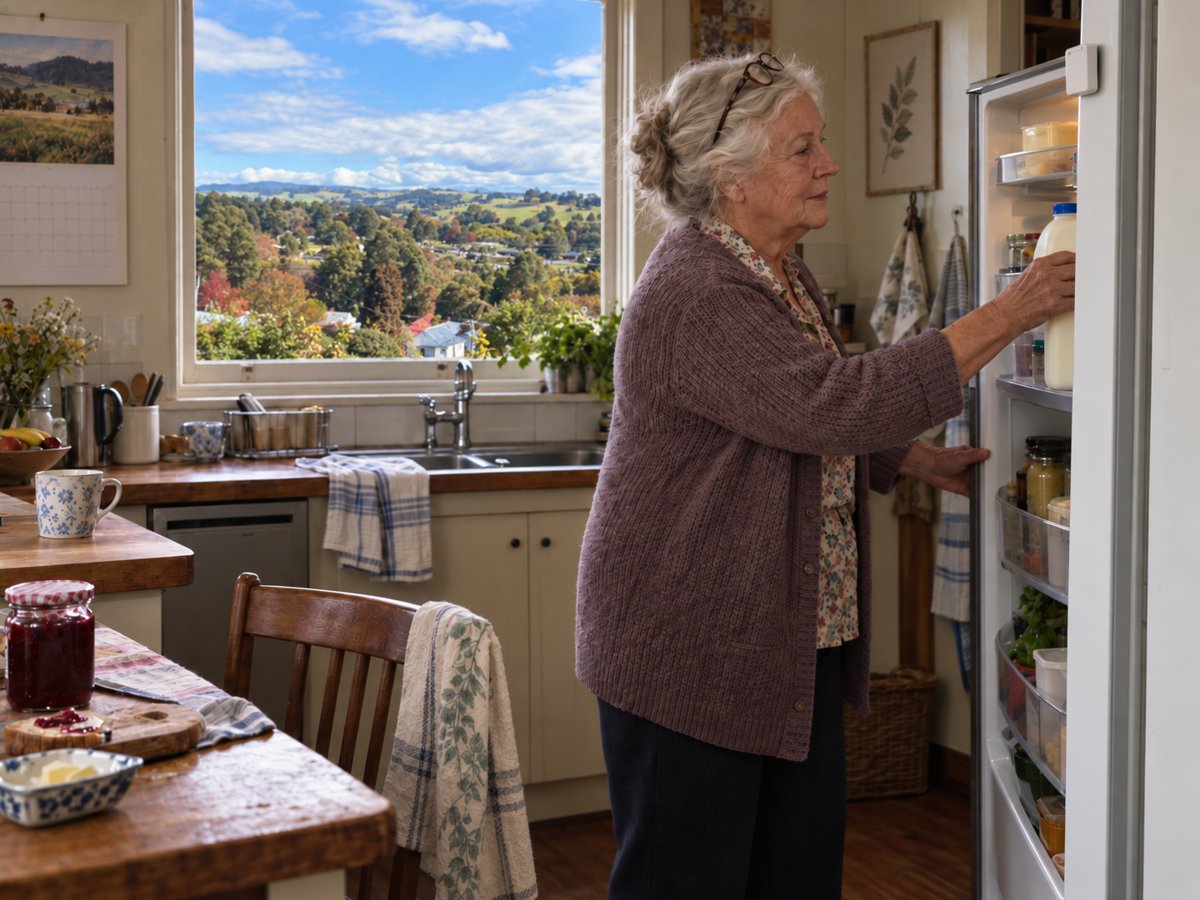
Illustration. The sensor is the small white unit on the fridge door. It records that the door opened, and when. Nothing else.
Silence can mean three things: a person who is not moving, a sensor with a flat battery, or a network that is down. Only the first should ever reach a person's phone. The software never calls 000 itself; a named local coordinator decides.
Try it
A day in Margaret's kitchen
Margaret is an invented resident, 84, who lives alone on the edge of town. She usually opens the fridge before half past nine. Here are two of her days side by side: one where nothing is needed, and one where something goes wrong.
Day one · No intervention
An ordinary Tuesday
Fridge opened
8 times, first at 07:12
11:00 check
Ordinary day
People contacted
None
Margaret is in and out of the kitchen from seven. At the 11:00 check the system sees an ordinary morning and does nothing. On most days, this is all it ever does.
Day two · An incident
A fall at breakfast
Last fridge opening
07:20
11:00 check
Quiet morning, equipment working
Found
12:31, by her keyholder
Margaret falls at about 7:30. At 11:00 the system sees no activity but a working sensor, and starts asking: Margaret, then Pat, then Jenny, who finds her. The coordinator takes over.
Green ticks are fridge openings. Blue diamonds are messages and calls, amber are visits and the coordinator, and red marks the fall itself. The shaded band is when Margaret usually first opens the fridge. Below, you can replay either day minute by minute, or try four other situations.
21:00Dorrigo time
What happens
Who has been contacted
What the system holds about today
Privacy
It is monitoring, so it should see as little as possible
Someone will call this surveillance of older people, and they will be partly right. The useful questions are how little it can see, who decides, and who it answers to.
What it holds
+The times a fridge door opened
+Whether the sensor's battery is alive
+The phone numbers of people the resident chose, encrypted
+A log of every time anyone looked, which the resident can read
What it never holds
−Any address. That lives on a paper register with the coordinator, so a stolen database cannot show which homes are empty.
−Camera, microphone or anything about health
−A history for family to browse. Contacts get one link per alert, which then expires.
−Anyone enrolled by someone else. The resident opts in and can stop any time; the sensor goes and the records are deleted that week.
If the scheme ever stops, every participant is told. Believing someone is watching when the equipment went quiet a month ago is worse than never joining.
Cost
A fifteen-home pilot costs about as much as one ambulance trip
Aerial, gateway, mounting, surge protection, backup power
$1,300
Seventeen sensors, including spares
$800
Installation materials, batteries, a second site
$800
One-off build
$2,900
Running cost: data, text messages, batteries
$250 / yr
For scale
From 1 July 2026 a NSW road ambulance costs a $948 call-out plus $8.56 for every kilometre of the round trip. One emergency run from Dorrigo to Coffs Harbour and back comes to roughly $2,000. That is a comparison of size, not a promised saving.
All figures are estimates to be re-quoted before purchase. The real ongoing cost is not equipment. It is about three hours a week of coordination: someone who holds the roster, follows up, and notices when a battery dies.
The pilot
Start with one kitchen
Each step has to work before the next one starts.
Four weeks
One kitchen
Prove the radio link and the daily rule in a single home before anyone else is involved.
Two weekends
Map the signal
Walk the township street by street, so nobody is enrolled where coverage is weak.
Before recruiting
A home for it
An insured auspicing body, a coordinator and a named backup, and an expert review of consent.
Twelve months
Fifteen homes
Residents who live alone and want it, invited through trusted places like the pharmacy counter.
At one year
Decide honestly
Continue, redesign or stop, against tests agreed in advance.
What would make us stop
Residents decline at a rate that says the idea is unwelcome, not just unfamiliar.
False alarms run above about one per home per quarter, which wears out volunteers.
No lasting coordinator arrangement can be found. Then the responsible thing is not to start.
Sensors prove much less reliable in real kitchens than on the bench.
What we are not claiming
This pilot cannot show that lives are saved, and does not try. It tests whether people accept it, how fast a genuine quiet day is noticed, and how often alarms are false.
A sensor on a fridge door is a poor substitute for a neighbour who notices the curtains haven't opened. It is offered because noticing should not depend on somebody happening to walk past.